Creating Calm Spaces for Your Puppy to Thrive
Welcoming a puppy into your home brings joy and excitement, but it also comes with challenges. Puppies are full of energy and curiosity, which can sometimes lead to stress or overwhelm. One of the best ways to support your puppy’s growth and well-being is by creating calm spaces where they feel safe, relaxed, and comfortable. These spaces help puppies learn to settle down, reduce anxiety, and develop healthy habits that last a lifetime.
This post explores practical ways to design and maintain calm environments for your puppy. You will learn how to choose the right location, set up the space, and use calming tools and routines that encourage your puppy to thrive.
Why Calm Spaces Matter for Puppies
Puppies experience the world intensely. New sights, sounds, and smells can easily overstimulate them. Without a quiet retreat, puppies may become anxious, restless, or even develop behavioural problems like excessive barking or chewing.
A calm space offers:
Safety: A place where your puppy can retreat from overwhelming stimuli.
Comfort: A cosy spot that feels like their own den.
Rest: Encouragement to nap and recharge, which is essential for healthy development.
Training support: A controlled environment to practice calm behaviours.
By providing a calm space, you help your puppy build confidence and emotional balance.
Choosing the Right Location for Your Puppy’s Calm Space
Selecting the best spot in your home is the first step. Consider these factors:
Low traffic area: Avoid busy hallways or rooms with constant activity.
Away from loud noises: Keep the space distant from televisions, kitchen appliances, or outdoor noise.
Moderate temperature: Ensure the area is not too hot or cold.
Visibility: Puppies often feel more secure if they can see their family but are not directly in the middle of activity.
For example, a quiet corner in the living room or a bedroom nook can work well. Avoid placing the space near doors that open frequently or near windows with distracting views.
Setting Up the Calm Space
Once you pick the location, create a welcoming environment with these essentials:
Comfortable bedding
Choose a soft bed or crate mat that supports your puppy’s body. Some puppies prefer enclosed crates for a den-like feel, while others like open beds.
Familiar scents
Add a blanket or toy that smells like you or their littermates. Familiar scents help puppies feel secure.
Toys and chews
Include safe chew toys or puzzle toys to keep your puppy engaged without overstimulation.
Water bowl
Keep fresh water nearby, especially if the space is used for longer periods.
Lighting
Soft, natural light is ideal. Avoid harsh artificial lighting that can be unsettling.
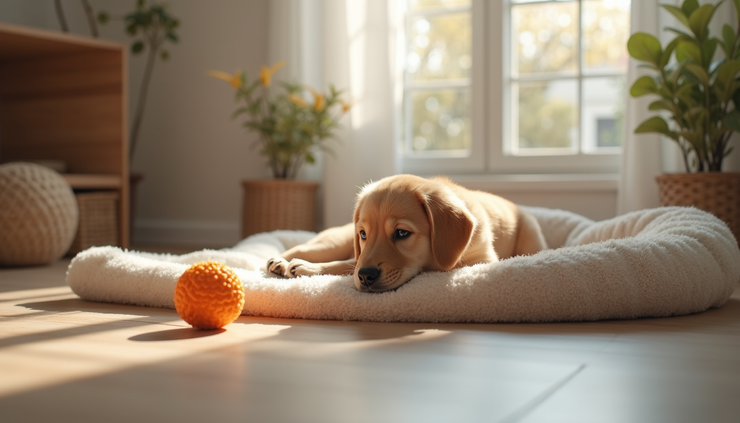
This calm puppy corner offers a safe retreat with comfortable bedding and familiar toys.
Using Crate Training to Enhance Calmness
Crate training is a popular method to create a calm space. When introduced properly, a crate becomes a puppy’s personal den. It helps with:
Safety during unsupervised times.
Reducing anxiety by providing a secure environment.
House training by teaching bladder control.
Tips for crate training:
Make the crate inviting with bedding and toys.
Never use the crate as punishment.
Sit by the crate at the beginning and stay calm and peaceful, reward the puppy with treats in the crate and don't shut the door until they are ready.
Gradually increase the time your puppy spends inside.
Establishing a Routine Around the Calm Space
Puppies thrive on routine. Consistent use of the calm space helps them understand when it’s time to rest or settle down. Consider these steps:
Set quiet times during the day when your puppy is encouraged to relax in their space.
Use calming cues such as a soft voice or gentle petting when your puppy enters the space.
Limit distractions by turning off loud music or TV during these times.
Reward calm behaviour with treats or praise to reinforce the habit.
For example, after playtime, guide your puppy to their calm space for a nap. Over time, they will associate the area with relaxation.
Tools and Techniques to Promote Calmness
Several tools can support your puppy’s calm space:
Calming sprays or diffusers with pheromones mimic natural comforting scents.
Soft music or white noise can mask sudden sounds that might startle your puppy.
Weighted blankets designed for dogs provide gentle pressure that soothes anxiety.
Chew toys help relieve stress and keep your puppy occupied.
Try different options to see what works best for your puppy’s personality.
Managing Visitors and New Experiences
Visitors, new environments, or changes in routine can disrupt your puppy’s calm space. Prepare by:
Introducing visitors slowly and allowing your puppy to retreat to their calm space if overwhelmed.
Bringing familiar items like their bed or toys when traveling.
Maintaining routines as much as possible during changes.
This approach helps your puppy feel grounded even when life gets busy.
Signs Your Puppy Needs More Calm Time
Watch for signs that your puppy may be overstimulated or stressed:
Excessive barking or whining
Restlessness or pacing
Chewing on inappropriate items
Avoidance or hiding
If you notice these behaviours, encourage your puppy to spend more time in their calm space and adjust the environment to reduce triggers.
Encouraging Independence Through Calm Spaces
A calm space teaches your puppy to enjoy time alone without anxiety. This independence is crucial for preventing separation anxiety later. Practice short periods of separation by:
Leaving your puppy in their calm space while you step into another room.
Gradually increasing the time apart.
Returning calmly and quietly to avoid creating excitement around arrivals and departures.

Comments